
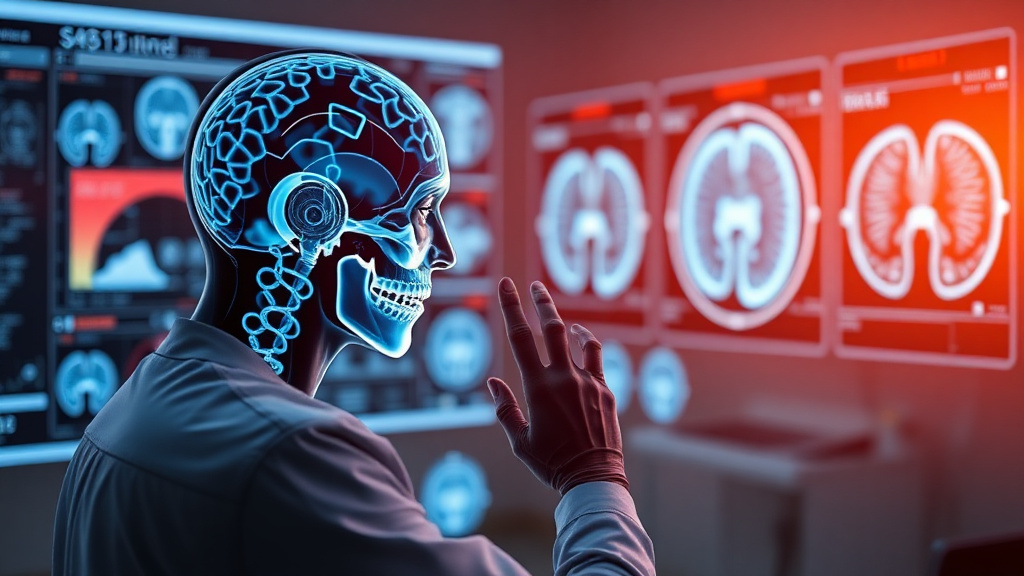
Imagine a world where diseases are detected in seconds with exceptional accuracy, where human error turns obsolete, and where patients receive critical diagnoses before symptoms even emerge. This is not anymore science fiction—it’s occurring today. AI technology is reshaping healthcare diagnostics, leveraging advanced computational models and sophisticated neural architectures to analyze medical imaging, lab results, and patient data with remarkable precision. This article investigates how AI technologies are reshaping diagnostic medicine, speeding up treatment timelines, and ultimately improving patient outcomes across the globe.
Revolutionary Impact of AI on Clinical Imaging
AI technology has fundamentally transformed medical imaging by enabling radiologists to detect irregularities with remarkable precision and efficiency. AI algorithms analyze thousands of images in seconds, detecting fine details that human eyes could overlook. This technology reduces diagnostic errors, accelerates patient treatment timelines, and significantly improves clinical outcomes across multiple imaging techniques including X-rays, CT scans, and MRI imaging.
The adoption of AI in radiological facilities worldwide has demonstrated impressive results, with some systems achieving diagnostic accuracy rates above 95 percent. These smart technologies function in partnership with radiologists, augmenting their expertise rather than replacing human judgment. By handling automatically regular scan assessment tasks, AI frees up medical professionals to dedicate attention to challenging situations, patient interaction, and diagnostic decisions, ultimately enhancing patient care quality and patient satisfaction.
Advanced Neural Networks in Medical Imaging
Deep learning techniques embody the leading frontier of artificial intelligence applications in radiology, employing layered network structures to interpret sophisticated radiological datasets. These sophisticated systems derive insights from large repositories of labeled medical images, acquiring the ability to recognize disease patterns, structural differences, and abnormal findings with remarkable precision. convolutional networks demonstrate superior performance in image analysis, isolating significant attributes that distinguish between normal versus pathological structures with medically meaningful accuracy.
The deployment of advanced neural networks in radiology departments has revealed significant promise, notably in detecting cancers, heart conditions, and neurological conditions. These models progressively enhance through adaptive training systems, accommodating new information and refining their detection accuracy. Radiologists growing depend on AI-powered decision support systems to validate findings, prioritize urgent cases, and deliver complete assessments, creating a synergistic partnership between professional judgment and machine learning systems.
- Convolutional neural networks detect tumors in diagnostic imaging accurately.
- RNN models analyze time-series image data with strong performance.
- Transfer learning enables rapid deployment across different imaging modalities.
- Multi-algorithm approaches integrate various models for enhanced diagnostic reliability.
- Attention mechanisms emphasize medically relevant areas in medical images.
Advancing Diagnostic Precision and Patient Outcomes
Artificial intelligence systems have shown exceptional capability in examining intricate healthcare information, often exceeding traditional diagnostic methods in accuracy and consistency. By working through extensive information and identifying subtle patterns undetectable to human observation, AI algorithms can recognize illnesses at more advanced detection points with substantially lower false positives. This progress leads to better health results, as early intervention becomes possible when treatment is most successful. Healthcare providers now leverage artificial intelligence solutions to reach better-informed treatment choices, reducing diagnostic delays and improving treatment accuracy across multiple specialties.
The integration of AI into diagnostic processes has fundamentally transformed clinical practice, enabling physicians to deploy their skills more strategically while machines manage data analysis. Actual deployments demonstrate that AI systems attain accuracy levels exceeding 95% in many use cases, from radiology to pathology. This collaborative integration between human expertise and machine intelligence establishes a powerful analytical platform. Patients benefit from faster diagnosis, more personalized treatment plans, and ultimately better health outcomes, while healthcare systems achieve enhanced performance and optimal resource allocation.
Early Identification of Disease and Prevention
Timely detection of disease constitutes one of artificial intelligence’s most transformative applications in medicine, allowing medical professionals to identify conditions before they advance to later phases. Machine learning systems analyze screening data, medical histories, and diagnostic imaging to identify high-risk individuals with remarkable precision. This preventive approach transforms medical care from treating existing conditions to preventive medicine, fundamentally changing clinical care strategies. AI systems can detect minor irregularities that could elude clinical detection, ensuring no critical findings are missed during first assessments.
Preventive AI applications are decreasing illness load and mortality rates across populations, especially for cancer detection, cardiovascular disease, and neurodegenerative conditions. By identifying high-risk individuals in early stages, healthcare providers can implement preventive interventions before severe complications develop. This method not only enhances individual patient outcomes but also lowers total medical expenses by preventing costly emergency care. AI-driven early screening initiatives are turning into standard practice in leading medical institutions globally, demonstrating measurable improvements in survival rates and overall well-being.
- AI algorithms recognize cancers at initial phases with enhanced precision
- Cardiovascular disease screening identifies at-risk patients prior to serious episodes
- Predictive analytics highlight neurological conditions in pre-symptomatic phases
- Preventive interventions lower complications and hospital admission requirements significantly
- Early detection programs improve survival outcomes at five years across numerous conditions
Deployment Obstacles and Outlook Ahead
Current Implementation Barriers
Despite AI’s remarkable potential in healthcare diagnostics, substantial implementation challenges persist across the industry. Privacy protection issues, compliance with regulatory standards, and requirements for extensive clinical validation slow deployment timelines. Additionally, healthcare institutions must invest substantially in infrastructure upgrades and employee education to integrate AI systems successfully. These barriers, while substantial, are gradually being addressed through collaborative efforts between technology companies, medical institutions, and governing authorities worldwide.
Integration with existing healthcare workflows creates an additional significant challenge for AI implementation. Many hospitals operate with legacy systems not compatible with contemporary AI platforms, requiring costly and lengthy upgrades. Furthermore, clinician skepticism and opposition to automated decision-making demand comprehensive education programs. Establishing trust between healthcare providers and AI systems demands transparent algorithmic processes, clear explanation of diagnostic recommendations, and demonstrated clinical outcomes that confirm AI’s superiority over conventional diagnostic approaches.
Future Potential and Growth Areas
The future outlook of AI in healthcare diagnostics seems highly favorable, with advanced innovations positioned to resolve existing constraints. Sophisticated federated learning methods will facilitate secure data sharing between organizations without compromising patient privacy. Next-generation AI models will grow more transparent, enabling physicians to grasp the diagnostic process. Ongoing funding in R&D efforts suggests enhanced diagnostic accuracy, quicker computational performance, and expanded applications in multiple healthcare disciplines, ultimately transforming worldwide medical care systems.
